← Back to Home

EV Charger vs. EV Outlet: What's the Difference?
EV charger vs. EV outlet, explained: what EVSE is, how NEMA 14-50 outlets and hardwired units differ, charging levels, and which to install at home.
People use the two terms as if they mean the same thing. They don't, and mixing them up can lead to paying for the wrong install. Here's the clean distinction.
TL;DR: An EV outlet is a high powered wall receptacle (like a NEMA 14-50) that you plug a portable charging unit into. An EV charger, more precisely called EVSE (Electric Vehicle Supply Equipment), is the device that actually manages power delivery to your car, whether it plugs into an outlet or wires straight to the wall. The outlet is the socket. The charger is the equipment that talks to your car.
The quick answer
Think of a phone. The wall outlet provides power, and the charging brick does the work of delivering it safely to the device. With EVs, the "charger" most people picture mounted in the garage is the EVSE. It controls the flow of electricity and communicates with the car. The "outlet" is just the receptacle that EVSE might plug into.
One small technicality: the actual charger that refills the battery lives inside the car. The box on your wall is technically supply equipment. In everyday speech that wall box is what everyone calls the charger, and that's fine.
What an EV outlet is
An EV outlet is a 240 volt receptacle wired into your garage or driveway, most often a NEMA 14-50, the same style outlet that powers an electric range or an RV hookup. You install the outlet, then plug a portable EVSE unit into it.
The upside of going the outlet route is flexibility and often a lower upfront cost. The unit is portable, so you can unplug it and take it with you, and swapping the EVSE later doesn't need an electrician. The tradeoff is that a plug in connection is generally limited to a lower amperage than a dedicated wired setup, which caps how fast it can charge.
What an EV charger (EVSE) is
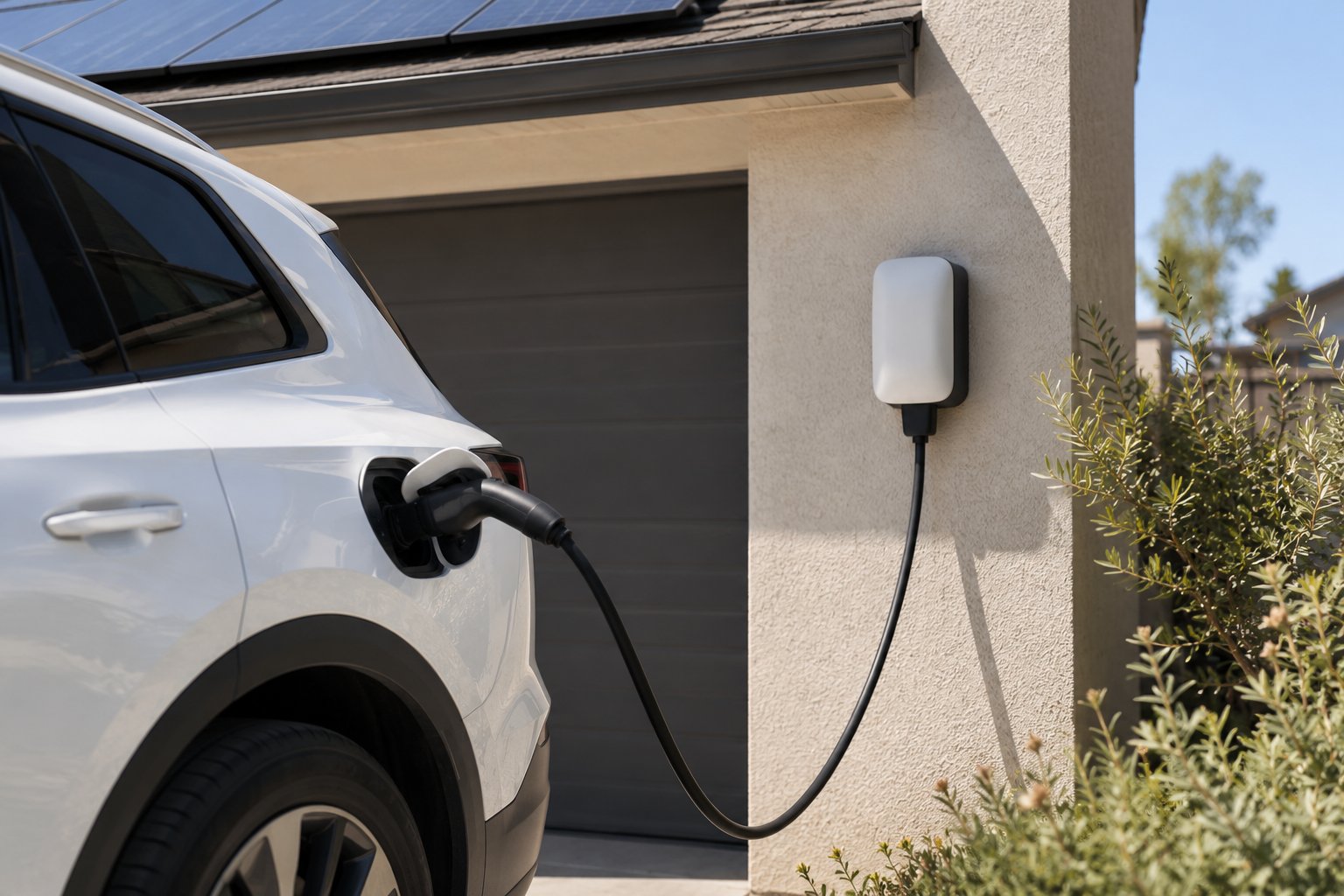
A hardwired EV charger is EVSE wired directly into your home's electrical system, with no plug. Because the connection is permanent, it can usually be set for higher amperage, which means faster charging. It's also a cleaner, more weather resistant install, which matters if you're mounting it outdoors.
The tradeoffs run the other way. It's a more involved install, it's not portable, and replacing the unit means bringing an electrician back. Plenty of smart chargers, with app control, scheduling, and usage tracking, come in both plug in and hardwired versions, so smart and hardwired are separate choices.
How charging levels fit in
The outlet versus charger question sits underneath a bigger one: charging level.
Level 1: plugging into a standard 120 volt household outlet with the cord that came with the car. Slowest option. Fine for low mileage days, painfully slow for a near empty battery.
Level 2: 240 volts, delivered either through a NEMA 14-50 outlet plus a plug in EVSE, or through a hardwired EVSE. This is the typical home setup and charges several times faster than Level 1.
Level 3 (DC fast charging): the high power public stations at travel stops. Not a home product. The electrical service they need is far beyond a residential panel.
So when someone asks "outlet or charger," they're almost always deciding how to do a Level 2 install at home: plug in through an outlet, or hardwired.
Which one should you install?
It comes down to a few questions. How fast do you need to charge overnight? Do you want to take the unit with you or swap it easily? Is the spot indoors or exposed to weather? And what can your existing electrical panel handle without an upgrade?
For a lot of homeowners, a NEMA 14-50 outlet plus a quality portable EVSE lands in the sweet spot of speed, cost, and flexibility. Others prefer a hardwired unit for top charging speed and a tidy permanent install. There's no single right answer, and panel capacity often settles it, since either route may call for electrical work.
How this connects to solar
Charging an EV at home adds a real new load to your electric bill, and that's where solar comes in. Generating some of your own power can offset the cost of charging, and a system sized with an EV in mind looks different from one sized without. If you're planning for both, have installers quote them together so the system fits your real usage.