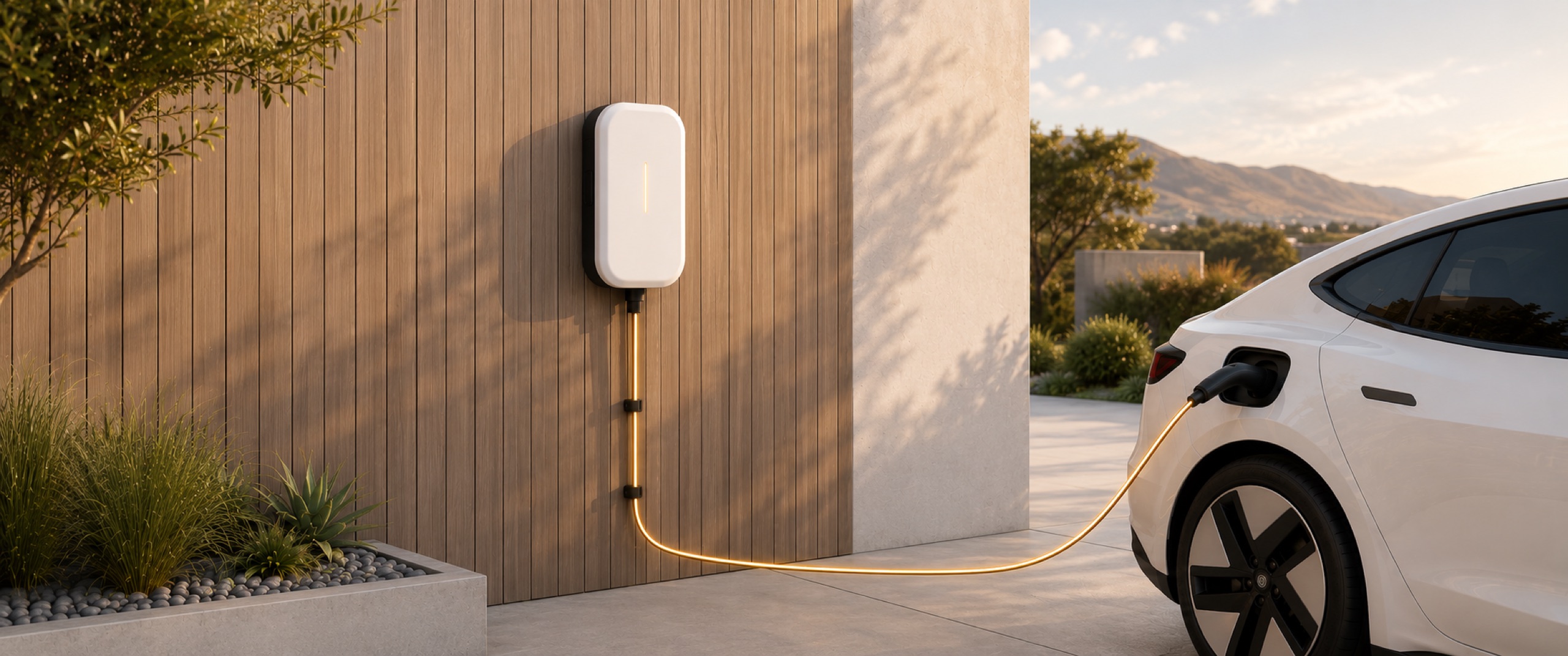
How much does it cost to install a home EV charger?
It varies more than most people expect. The charger itself is a few hundred dollars, but installed cost depends on how far your electrical panel is from the parking spot, whether that panel has spare capacity, and local permit fees. A short run to a modern panel is straightforward; a long conduit run or a panel upgrade costs more. Comparing quotes from licensed local electricians is the only way to see your real number.
Do I need a Level 2 charger, or is Level 1 enough?
For most EV owners, Level 2 is the practical choice. Level 1 plugs into a standard outlet and adds only a few miles of range per hour. Fine for plug-in hybrids or very low daily mileage. Level 2 runs on a 240-volt circuit and typically refills a battery overnight, which is what most drivers actually need. Your daily mileage is the deciding factor. We break down the differences in more detail in our guide to EV charger vs EV outlet.
Can I charge my EV with solar panels?
Yes. Pairing an EV charger with rooftop solar lets you fuel your car on power you generate instead of buying every kilowatt-hour from the utility. The cleanest setup charges during the day while your panels are producing, or stores solar in a battery to charge at night. It's the lowest cost-per-mile way to drive, and Solar Connect can quote the charger and solar together.
Do I need a licensed electrician to install an EV charger?
Yes. A Level 2 charger runs on a 240-volt circuit and should be installed by a licensed, insured electrician, both for safety and to keep the work to code and permitted. Many utilities and equipment warranties also require professional installation. Every electrician in the Solar Connect network is licensed and vetted, so you compare quotes without checking credentials yourself.
How long does a home EV charger installation take?
The physical install is usually a few hours once everything is lined up. The longer part comes first: pulling a permit, confirming your panel can handle the load, and scheduling. A simple install near your panel can wrap in a day; one needing a panel upgrade or a long wiring run takes more time. Your electrician gives you a timeline with the quote.
Will a home charger work with any EV?
In almost all cases, yes. Nearly every EV sold in North America charges on the J1772 standard for Level 2, and Teslas include an adapter. Newer cars and chargers are moving to the NACS connector, but adapters bridge the two. A quality Level 2 charger works with essentially any current EV. If you're unsure about your model, the installer confirms it before installing.