
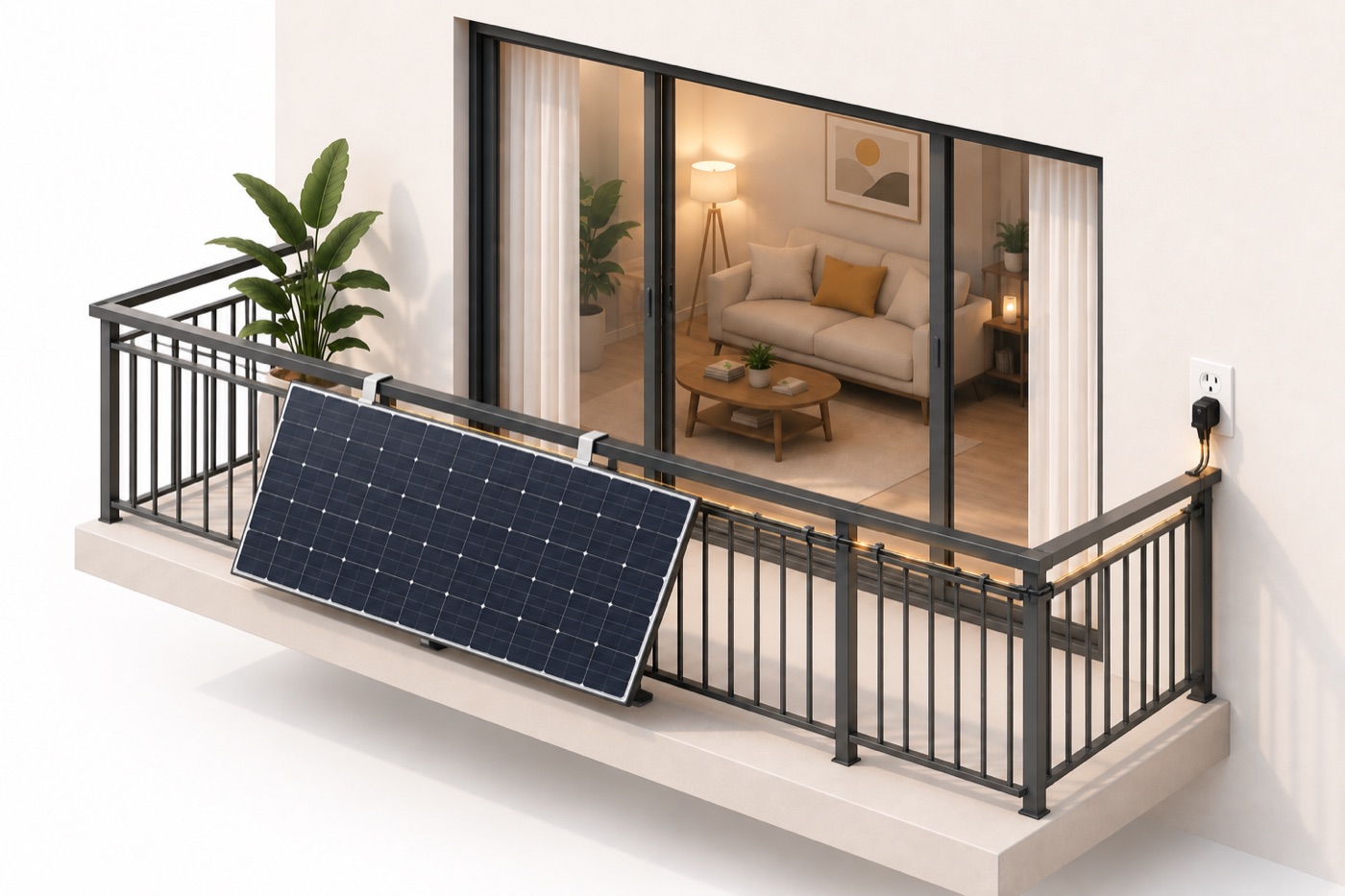
The cable ends in a normal plug. Everything the panel makes is used by whatever is already drawing power inside, and nothing is sent back to the grid. That is the reason the permit and the interconnection paperwork disappear.
Where SB 868 actually stands
Senate Bill 868, the Plug Into the Sun Act, would treat small plug-in solar devices as household appliances rather than power plants. That one reclassification removes the utility interconnection application and the permit fees, which are the two things that turn a $600 panel into a $3,000 project.
What the bill would allow
Systems up to 1,200 watts AC per home, plugged into a standard 120-volt outlet. Devices have to be safety certified, including anti-islanding, the feature that shuts the panel off the moment the grid goes down so nobody working on the line gets hurt. Utilities would be barred from charging interconnection fees for them.
Twelve hundred watts is not a roof system. It will not run your air conditioning and it will not take you off the grid. It is closer to the size that covers a refrigerator, a router, and the other things drawing power all day whether you are home or not.
Who each one is actually for
Rooftop solar has never worked for renters, and it has never worked for most apartments. You cannot put panels on a roof you do not own or a roof you share. Plug-in is the first version of this a tenant can buy, set up in an afternoon, and unplug when the lease ends.
Get told the day it becomes legal
No payment, no deposit, no order. There is nothing to buy yet, and we are not going to pretend otherwise by taking money for a product California has not legalized. Join the list and we will email you when the bill is decided, whichever way it goes.
We will write when the Governor decides, and again if there is ever something to buy. Nothing in between.
Questions people actually ask
Is plug-in solar legal in California right now?
No. It is not legal today. SB 868 would change that, and it passed both houses of the Legislature on August 25, 2026 and went to the Governor. He has until September 30, 2026 to sign it or veto it, and if he does neither it becomes law without his signature. If it becomes law it takes effect January 1, 2027.
What would SB 868 actually allow?
Up to 1,200 watts of aggregate AC output per home, plugged into a standard outlet. The bill exempts these devices from interconnection requirements, so there is no application to your utility and no approval to wait for. The device has to be certified as a plug-in photovoltaic system by UL or an equivalent lab, including its anti-backfeeding features.
Would I need a permit or an electrician?
Not under the proposed rules. That is the whole point of the category. There is no roof penetration, no work inside your electrical panel, and nothing added to your service. Your utility may ask you to fill in a simple online registration with the make, model and size of the device, but registration is not an approval and cannot be used to stop you.
Can I use plug-in solar if I rent?
The bill removes the utility from the equation. It does not touch your lease or your HOA rules on exterior modifications. If you rent, you will still be having that conversation with whoever owns the building, and the plain reading of SB 868 is that it does not give you a right to install over a landlord's objection.
How much would 1,200 watts do for my bill?
Less than most coverage implies, and it depends on the same things rooftop production depends on: which way the panel faces, what shades it, and where you live. A 1,200 watt setup is a small fraction of a rooftop system and it is not going to zero out a bill. What it does is reduce the power you buy during daylight hours, on something you can buy yourself and take with you when you move.
When could I actually buy one?
Not yet, and be skeptical of anyone selling you a California plug-in system today. If the Governor signs SB 868, the earliest the law takes effect is January 1, 2027. Passing the Legislature is not the same as being legal.
Meanwhile, if you do own your roof
Rooftop solar is legal today and is a different scale of thing entirely. If you own a house with a usable roof, that is the conversation worth having now, and you can see real quotes from several installers without anyone calling you.