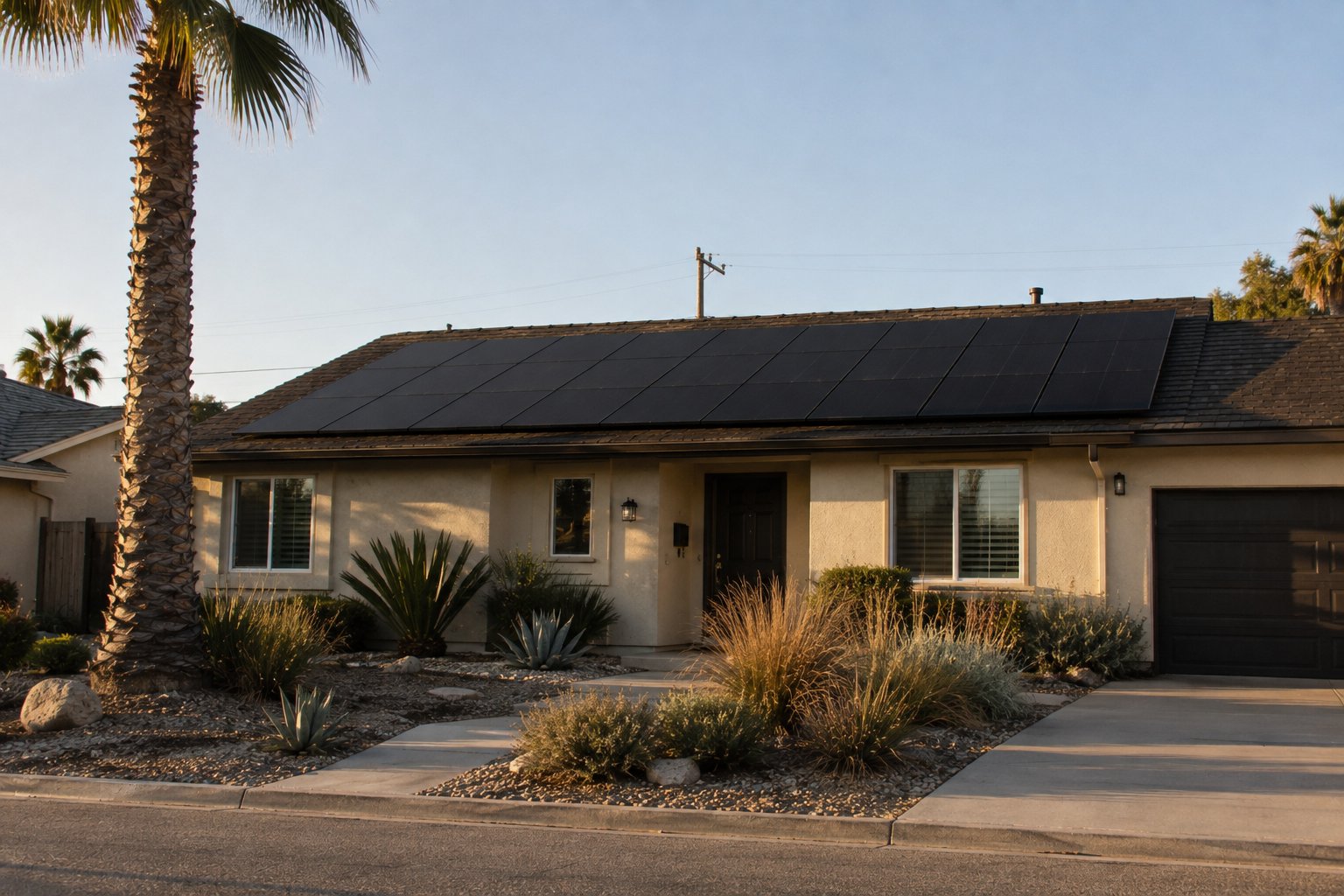
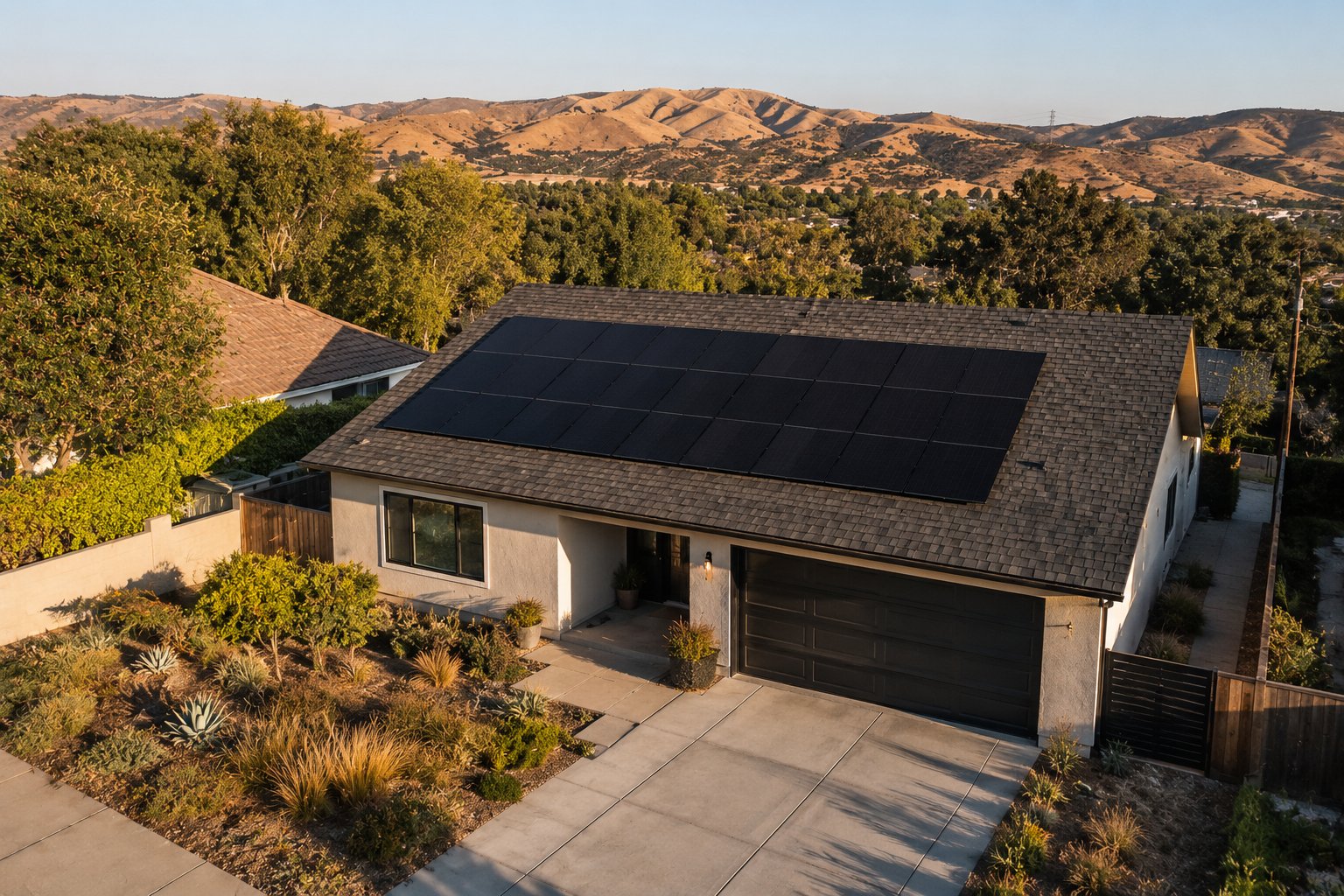
Solar will not zero out a California electric bill. It replaces the part that keeps rising and leaves a small fixed piece, which is the better half of the trade.
Not entirely. And the reason why is the same reason solar is worth looking at.
A California electric bill is really two different animals stapled together. One part moves with every kilowatt-hour you use, and it has been climbing for a decade with more increases already approved. The other part is a flat monthly charge that sits there no matter what. Solar goes after the first one, which is the one doing the damage.
Solar offsets the per-kilowatt-hour portion of your bill, and that is the portion that has roughly doubled over the past ten years. It does not offset fixed monthly service charges, which are comparatively small and comparatively stable. Most solar homes end up with a modest remaining bill instead of none, and they trade a rising cost for a fixed one.
The half of your bill that keeps going up
Volumetric charges are priced per kilowatt-hour. This is where the money is, and it is where the increases have landed.
According to the CPUC's own data, SCE residential rates rose about 85% between January 2015 and February 2025. Measured from early 2016 to mid-2026, they more than doubled. On October 1, 2025 alone, a typical household using 500 kWh a month went from $171.17 to $193.23, a roughly 13% jump in a single billing cycle, driven largely by wildfire cost recovery.
Increases of roughly 2.6% a year for 2027 and 2028 are already approved and sitting in a regulatory decision.
Every one of those increases applies to the per-kilowatt-hour portion of your bill. A household with no solar carries 100% of that exposure. That is the part a rooftop system takes off the table, and it gets more valuable each time rates move, not less.
The half solar cannot touch, and why it matters less
Fixed charges do not move with usage. They are the same in a month you are on vacation as in a month you run the air conditioning constantly.
In late 2025, SCE introduced a Base Services Charge on the delivery side of the bill and lowered the per-kilowatt-hour price by around 10% at the same time. The total did not fall 10%. Some of what used to be volumetric simply became fixed.
California bills also carry non-bypassable charges, which fund programs like low-income assistance and efficiency work and apply to grid power regardless of how much solar you have. And you stay a utility customer, because grid connection is what lets you draw at night and export during the day.
So there will be a statement. It will be smaller, and the piece that remains is the predictable piece. Anyone showing you a projection that goes to zero is modeling a bill that does not exist in California, and that is worth catching before you sign rather than after.
Why timing changes what your system is worth
Under California's net billing rules, power you export earns noticeably less than power you use the moment it is produced.
A kilowatt-hour your house consumes at generation time avoids the full retail rate. One sent to the grid at noon and bought back at 7pm does not come close to breaking even.
That sounds like bad news. In practice it is just a design instruction: the more of your own production you use, the better the system performs. It is the reason batteries appear in so many California quotes now, and also the reason a battery is not automatic. A household that already uses a lot of power during daylight may capture most of the value without one.
What a realistic bill looks like afterward
Expect a fixed charge every month. Expect volumetric charges for grid power beyond what your system covered, concentrated in evenings and winter. Expect credits from exported production offsetting part of that. And in many California setups the year settles on an annual true-up rather than evening out month to month, which catches people off guard.
Winter is the piece homeowners underestimate most. Short days cut production, heating can raise load, and a system sized on summer output alone leaves a gap in January.
None of that is a reason to skip solar. It is a reason to size it on real numbers.
How to get more out of the system you buy
Size it on twelve months of usage, not one bill. A system sized from a July statement runs too big. One sized from February runs too small. Your utility account holds the full year, and any installer worth hiring will ask for it.
Check your rate plan. A time-of-use plan with heavy evening use produces very different economics from one where most usage happens midday. Plans are changeable, and the best plan for a house with solar is frequently not the plan that house is on now.
Move what you can into daylight. Dishwasher, pool pump, EV charging. Each load you shift converts exported power at a low credit into self-consumed power at full retail value. Unglamorous, and it works.
Look at storage on its merits. A battery raises the share of your own production you keep and adds cost. Whether that trade works depends on your load shape and how much an outage costs you, not on a rule of thumb.
What to ask when a quote promises a zero bill
Ask which charges the projection assumes disappear. If it does not separate volumetric from fixed, it is not describing your statement.
Ask what export credit rate was assumed, and whether it reflects current net billing rather than the older net metering arrangement that produced much rosier numbers.
Ask what December looks like, not just the annual average.
Then get a second quote. Two installers pricing the same roof routinely produce different system sizes and different projections, and the assumptions underneath are where the gap usually lives. A second set of numbers is the fastest way to tell which one modeled your house.
Worth noting on incentives: the federal Residential Clean Energy Credit expired at the end of 2025. If you installed before then you may still claim it on your 2025 return, and a tax professional is the right person to ask about your situation. For leases and power purchase agreements, the company that owns the system can claim the commercial credit through the end of 2027 and factor it into your pricing, which is part of why third-party ownership looks different now than it did a few years ago.
The honest comparison was never solar against a zero bill. It is solar against another decade of increases on the largest part of your statement, with the difference being whether your roof is doing any of the work.
Compare quotes from vetted local installers in minutes, without a sales call.