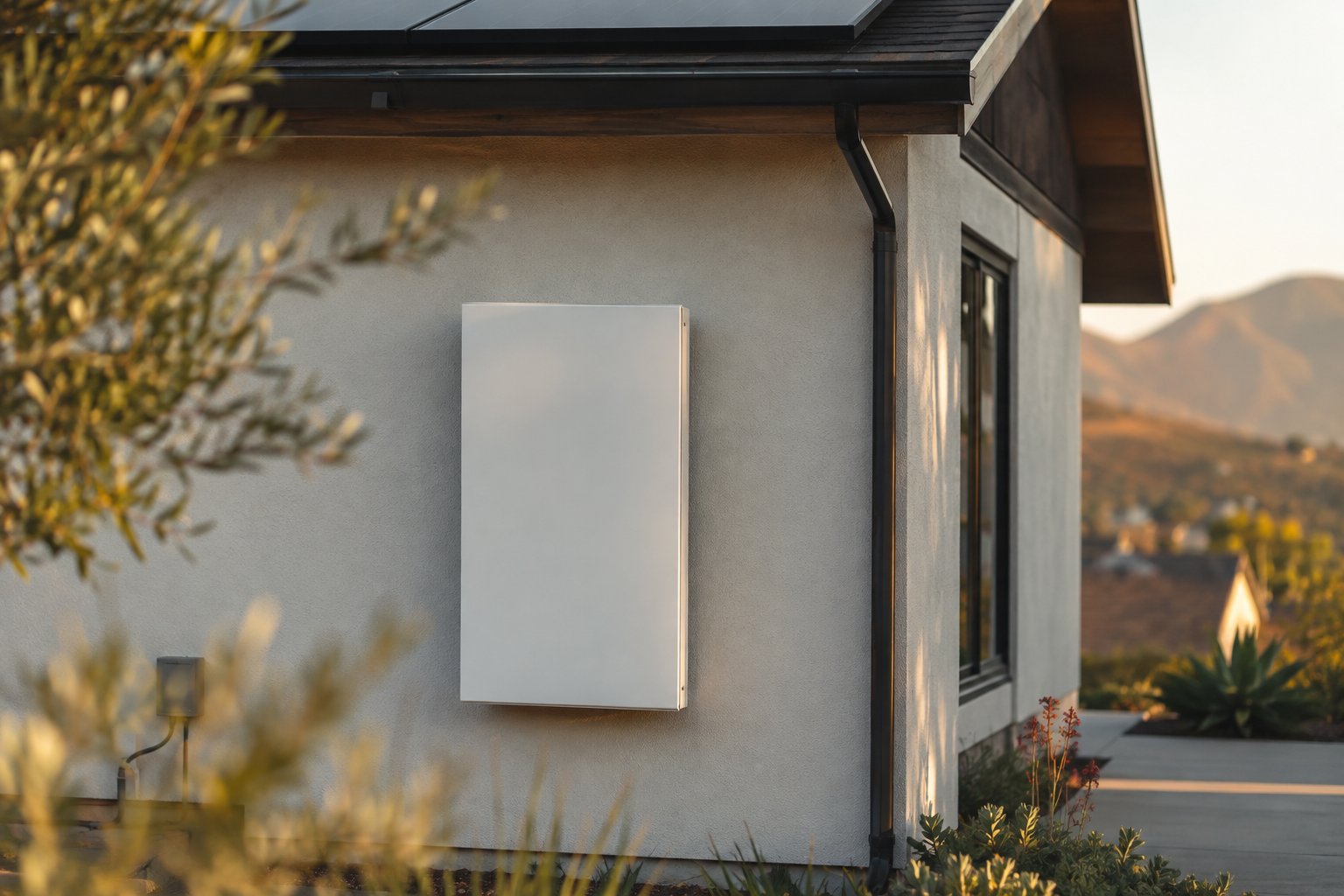
Tesla Powerwall 3 vs Enphase IQ Battery 10C in 2026: capacity, power output, modularity, warranty, install cost, and which one fits which home.
If you're picking between Powerwall 3 and Enphase IQ Battery 10C, you've already done the harder decision. Solar plus battery makes sense for you. Now you need to know which battery actually fits your home.
The short answer: Powerwall 3 is the right pick for most California homes wanting one box doing solar inverter, storage, and backup with high power output. IQ Battery 10C is the right pick for homes that already use Enphase microinverters, want to start with a smaller system and add to it, or want the longer warranty.
But the full answer requires looking at five things that actually matter when these systems run in real homes: capacity, continuous power, inverter integration, cost, and serviceability.
Why this comparison matters more in 2026
NEM 3.0 turned batteries from optional into near-required for California solar economics. Exported solar pays roughly 75% less than it did under NEM 2.0. Without a battery, your panels produce midday power that gets paid out at ~$0.05/kWh while you import evening power at $0.40-0.55/kWh. The battery stores midday production for evening self-consumption, which is where the actual savings come from.
The federal Residential Clean Energy Credit also expired December 31, 2025. The 30% tax credit for purchased systems is gone for new installs. That tightens the financing math and makes the battery choice more important. You can't afford to buy 13 kWh and realize you needed 17.
So the question of "which battery" carries more weight in 2026 than it did three years ago. Picking the wrong one used to be a $3,000 mistake. Today it's closer to $7,000 once you factor in retrofit costs.
Powerwall 3: the all-in-one approach
Tesla Powerwall 3 launched in 2024 and quickly became the default for new solar+battery installs. The big change from Powerwall 2 is the integrated solar inverter with 6 MPPT inputs, meaning your panels connect directly to the Powerwall instead of needing a separate inverter.
The specs that matter:
- 13.5 kWh capacity per unit
- 11.5 kW continuous power output (the highest in the residential class)
- 6 MPPT inputs for solar panels
- AC-coupled and DC-coupled installations both supported
- 10-year warranty, unlimited cycles, 70% capacity retention at end of warranty
- Requires a Tesla-certified installer
What this means in practice: one box handles your inverter, your storage, and your backup. Fewer components, lower install complexity, and lower equipment cost when you're starting from scratch. The 11.5 kW continuous output also means your Powerwall can run AC, an EV charger, and the rest of your essential loads during an outage without load shedding.
The tradeoffs: it's still a single unit. If something goes wrong with the inverter or the cells, the whole system is offline until service. The 10-year warranty is shorter than some competitors. And the install certification requirement means fewer installers can do it.
Enphase IQ Battery 10C: the modular approach
Enphase took a different path. The IQ Battery 10C is built from 3.5 kWh modular blocks that you can stack to whatever capacity you need. Start with 10 kWh, add another 3.5 kWh next year, add another the year after. The modularity is the point.
The specs that matter:
- 10 kWh nominal capacity per unit (built from 3.5 kWh blocks)
- 7.68 kW continuous power output
- AC-coupled only (works with non-Enphase inverters)
- Pairs natively with Enphase IQ8 microinverters
- 15-year warranty, 6,000 cycles
- Requires an Enphase-certified installer
What this means in practice: if you already have an Enphase microinverter system, the IQ Battery slots in without disrupting your existing inverter setup. The modular design means a failure in one block doesn't bring down the whole system. The 15-year warranty is 50% longer than Powerwall's, which matters for long-horizon homeowners.
The tradeoffs: lower continuous power output (7.68 kW vs Powerwall's 11.5 kW). For most homes that's fine, but if you're running AC plus an EV charger plus a heat pump, you may need load shedding during outages. The AC-coupled-only architecture also means you need a separate inverter for the solar side, which adds equipment count for new installs.
Capacity head-to-head
A single Powerwall 3 holds 13.5 kWh. A single IQ Battery 10C holds 10 kWh.
For the same total capacity:
- 1 Powerwall = 13.5 kWh
- 1.35 IQ Batteries = 13.5 kWh (so realistically 2 units, giving you 20 kWh)
For most California homes the right total capacity is 13-17 kWh, which means either one Powerwall or two IQ Batteries.
Where modularity actually pays off: if your home grows. Buy a Tesla, an electric heat pump, or add solar panels two years from now, and you can extend the IQ Battery by 3.5 kWh at a time without replacing the whole system. With Powerwall, expansion means adding a second 13.5 kWh unit, which is a bigger purchase decision.
Power output head-to-head
Powerwall 3 outputs 11.5 kW continuously. IQ Battery 10C outputs 7.68 kW continuously.
Most homes don't need 11.5 kW continuous. The average California home draws 1-3 kW. Peak draw (AC running plus dryer plus EV charging at the same time) might hit 8-10 kW for short bursts.
Where the Powerwall headroom matters: backup during an outage. Powerwall's 11.5 kW can run AC, your fridge, an EV charger, the well pump, and the rest of your house without load shedding. IQ Battery's 7.68 kW handles essential loads but might need you to shed some non-critical circuits during peak draws.
If you live somewhere with frequent grid outages (PG&E PSPS territory, fire areas, parts of the Sierra) the Powerwall headroom is real value. If you're in stable grid territory and the battery is mostly for daily self-consumption, the IQ Battery's lower power output isn't a meaningful tradeoff.
Inverter integration
This is where Enphase has a structural advantage for some homes and a structural disadvantage for others.
If you already have Enphase IQ8 microinverters, the IQ Battery talks to them natively. You don't need to add anything to your inverter setup. The whole system stays Enphase. Service is simpler because everything is one ecosystem.
If you're starting from scratch with no existing solar, Powerwall has the structural advantage. The integrated solar inverter means fewer components, lower install cost, and a simpler permit package. The 6 MPPT inputs handle most residential solar arrays without needing optimizers or microinverters.
If you have a different string inverter brand, both batteries can work AC-coupled, but the integration is heavier. Run the install spec past your installer carefully.
Cost: what you actually pay installed
This is the most lied-about number in the residential battery industry. Manufacturer suggested retail price is one number. What you pay installed is another. Here are the ranges Solar Connect sees across the California market in 2026:
- Powerwall 3: $12,000-$15,000 installed for a single unit
- IQ Battery 10C: $11,000-$14,000 installed for a single unit
Both batteries qualify for the SGIP rebate in California. That can take $1,500-$11,000+ off the installed price depending on your tier eligibility. Full breakdown in our SGIP 2026 guide.
The price differences inside each range matter more than the differences between brands. A $12,000 Powerwall and a $13,500 IQ Battery aren't really different in long-run economics. A $12,000 Powerwall vs a $15,000 Powerwall is a $3,000 difference and worth understanding why.
When to pick Powerwall 3
The Powerwall is the right pick when:
- You're doing a new solar install with no existing inverter
- You want one box doing solar inverter, storage, and backup
- You have high evening peak loads (AC, EV charging, heat pump, big appliances)
- You're in PSPS or fire area territory and backup capability matters
- Tesla brand preference matters to you
- You want maximum capacity per unit (saves wall space)
When to pick IQ Battery 10C
The IQ Battery is the right pick when:
- You already have Enphase microinverters and want to stay in one ecosystem
- You want to start small (10 kWh) and add capacity over time as your needs change
- Modular failure tolerance matters more than maximum continuous power
- The longer 15-year warranty matters for your time horizon
- Your installer prefers the Enphase ecosystem and has more experience with it
FAQ
Is Powerwall 3 better than IQ Battery 10C?
Neither is universally better. Powerwall 3 wins for most new solar installs without existing inverter equipment, especially when high backup power matters. IQ Battery 10C wins for homes already running Enphase microinverters, and for homeowners who value modular expansion or the 15-year warranty.
How many Powerwall 3 units do I need?
For most California homes with $200-400/month bills, one 13.5 kWh Powerwall is enough for evening self-consumption. If you have high evening peak loads, multiple EVs, or a heat pump, plan for two units (27 kWh total) so you don't bottom out during peak summer days.
Can I add an IQ Battery to a non-Enphase solar system?
Yes. The IQ Battery 10C is AC-coupled, meaning it works with any solar inverter brand. You won't get the native Enphase ecosystem integration, but the battery itself functions normally. Some installers prefer it for retrofits onto existing string inverter systems.
What is the SGIP rebate for either battery?
Both qualify. Your tier eligibility determines the amount. General market tier currently runs $150-$200 per kWh of installed capacity. Equity tier and Equity Resiliency tier pay significantly more. Read the
SGIP 2026 guide for the full eligibility breakdown.
Do both qualify for warranty work after install?
Yes, as long as you use a certified installer. Powerwall requires a Tesla-certified installer for warranty claims. IQ Battery requires an Enphase-certified installer. Most California installers in the Solar Connect network carry both certifications.
What this means for your quote
When you compare battery quotes through Solar Connect, the proposals you get should each specify:
- Which battery brand and model
- Total kWh capacity (single unit or stacked)
- Which inverter (or whether the battery includes one)
- Installed price with and without SGIP rebate
- Warranty terms
Three quotes for the same capacity using different battery choices tells you more than three quotes for the same battery from different installers. Mix and match. Get one Powerwall quote, one IQ Battery quote, and let your installers' recommendation logic show you what makes sense for your specific roof, usage pattern, and electrical service.
For more on how home batteries work in general, see our
home batteries explainer. For why batteries became near-required in California, our
NEM 3.0 deep-dive covers the economic shift.