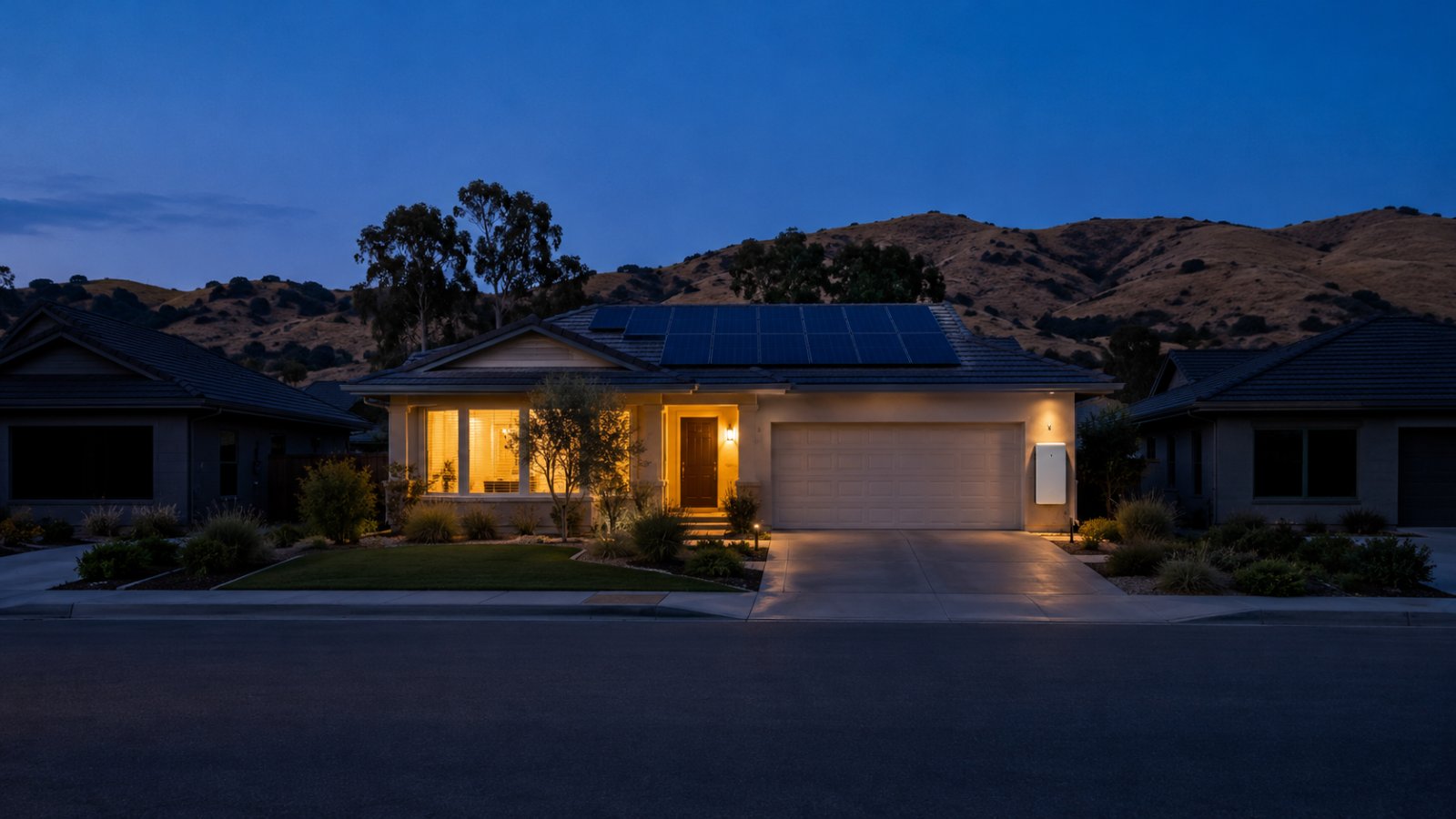
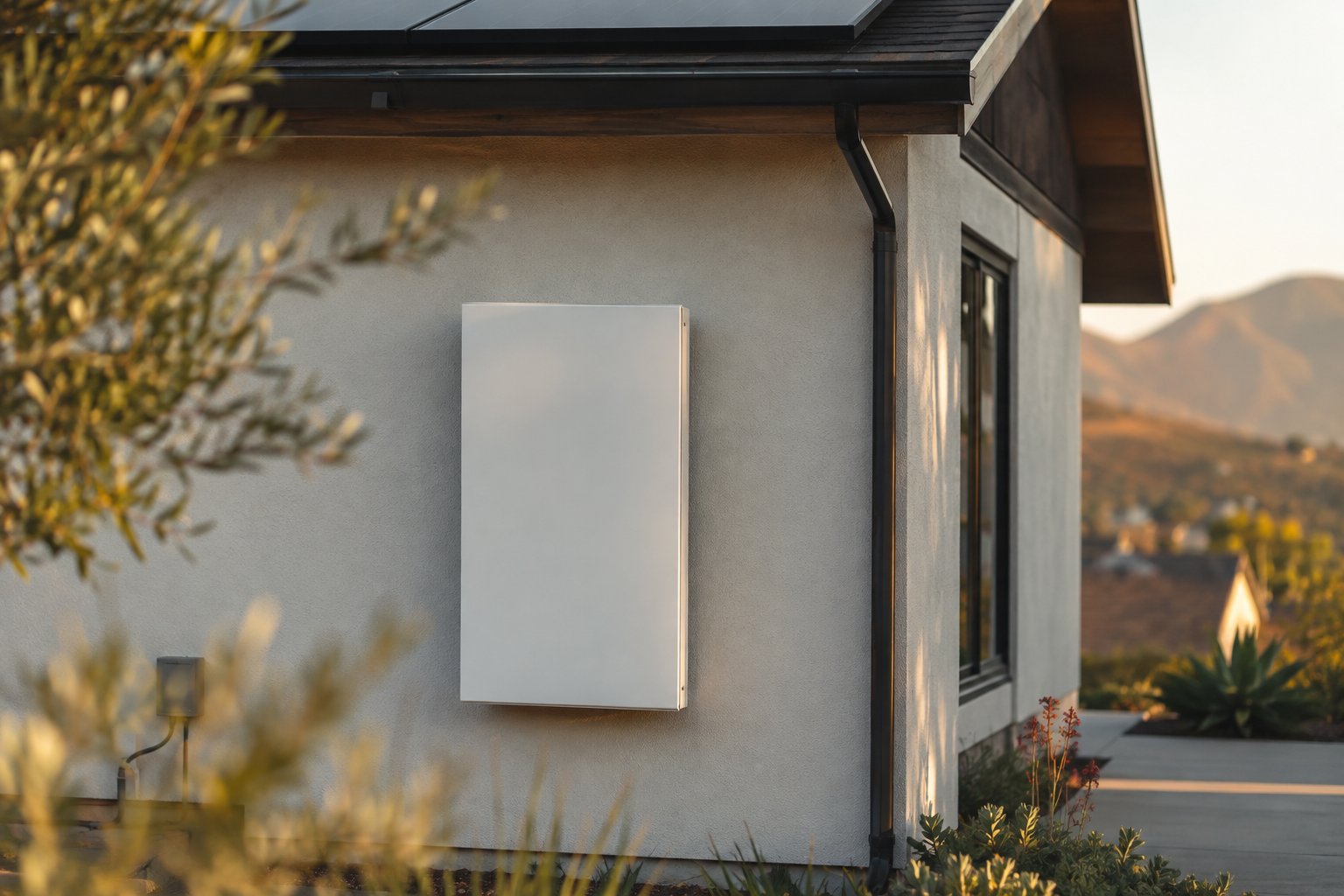
When California homeowners lose power during PSPS or wildfires, two solutions come up: solar plus battery, or a whole-home backup generator. Real cost, runtime, install complexity, and long-term math compared across common household scenarios.
Solar plus battery costs 2-3x more than a whole-home backup generator up front but pays back through daily bill savings, needs no fuel deliveries, and runs silently. A generator is cheaper day one, has longer sustained runtime for multi-day outages, and works regardless of solar production. For California homes on PSPS-risk grids, the practical answer is often both, with the battery handling 90% of outages and the generator as backup insurance for rare multi-day events.
Most California backup power shoppers pick between solar plus battery and a whole-home backup generator based on one variable: what happened during the last PSPS event. Homeowners who lost power for 8 hours think battery. Homeowners who lost power for 4 days think generator. The full comparison is more useful than either instinct.
Here's how the two actually stack up in 2026 for the homes we see in the Solar Connect marketplace.
What each system actually does
Solar plus battery stores midday solar production for evening use, provides backup power when the grid goes down, and lowers your utility bill every day. A typical residential setup is 6-10 kW of solar plus 10-20 kWh of battery storage (one to two units of something like a Tesla Powerwall 3 or Enphase IQ Battery 10C).
During a grid outage, the battery automatically islands from the grid, keeps critical circuits running, and recharges from the solar panels each day. Most systems can keep a household's essentials running indefinitely if the sun cooperates.
Whole-home backup generator runs on natural gas, propane, or diesel, kicks on automatically when the grid drops, and can power the entire home (not just essential circuits). Typical residential units are 14-24 kW output, running from a permanently installed transfer switch. Common brands include Generac Guardian, Kohler 20RESA, and Champion Home Standby.
Runtime depends on fuel supply. Natural gas from the utility runs indefinitely as long as the gas grid is up. Propane runs 24-48 hours per tank refill on typical residential loads.
Cost comparison
Up-front install cost varies significantly by home:
| System | Typical install (turnkey) |
|---|---|
| Solar (6-10 kW) plus battery (10-20 kWh) | $30,000 - $55,000 |
| Whole-home backup generator (14-24 kW) | $10,000 - $18,000 |
| Portable generator + manual transfer switch | $2,000 - $4,000 |
Solar plus battery has bigger sticker shock but lowers your monthly utility bill every day. A typical California homeowner saves $150-300 per month on utility costs once solar is running.
Generators cost less up front but produce zero savings on normal days. They cost money to run (fuel plus service). Realistic annual carrying cost for a whole-home unit: $200-600 in service and fuel.
SGIP rebates cover a real share of California battery cost ($150-250 per kWh depending on tier), which lowers the effective battery price. Generators are not eligible for SGIP.
What each does well
Solar plus battery wins on:
- Daily bill savings (generators do nothing here)
- Silent operation (batteries make no noise, generators are 65-75 dB)
- Zero fuel logistics (no propane deliveries, no gas prices, no diesel supply)
- Air quality (no combustion emissions)
- Rebate stacking (SGIP plus installer incentives)
- Home resale value (solar adds appraisal value in California, generators mostly don't)
Backup generator wins on:
- Total output for whole-home loads (a 22 kW generator runs your AC, electric range, EV charger, and everything else simultaneously)
- Sustained multi-day runtime (natural gas has no practical duration limit)
- Independent of sun (works at night in winter, during smoke-heavy skies)
- Lower up-front cost
- No solar-siting requirements (roof shading and orientation don't affect it)
What each does poorly
Solar plus battery limitations:
- Battery capacity is finite. A 10 kWh battery runs a household for roughly 8-14 hours of essential loads. Running the AC or electric range shortens that dramatically.
- Solar production drops in winter and during heavy smoke (relevant for California wildfire season)
- Islanding a full home from the grid usually requires a smart panel or expensive whole-home transfer switch. Most installs are essential-loads-only.
Backup generator limitations:
- Requires installation of a permanent fuel line (natural gas or propane). Homes without existing gas service face significant added cost.
- Requires quarterly to annual maintenance (oil changes, filter changes, load-bank tests). Missing service equals failure at the moment you need it most.
- Noise. Neighbors notice.
- Permits, HOA approvals, and setback requirements can add weeks to install.
- Zero benefit outside of outages. Sits idle 99.9% of the year.
Fuel and maintenance in the real math
Generators need fuel and service. Solar plus battery doesn't. Over a 15-year timeframe:
- Whole-home generator: roughly $3,000-9,000 in fuel and service, plus one likely major repair or replacement
- Solar plus battery: minimal maintenance (occasional inverter check, battery warranty covers most failures within 10 years)
The generator's operating cost adds up quietly. A homeowner who bought a Generac Guardian in 2020 and used it during 3 PSPS events and quarterly service has probably paid another $2,000-4,000 in operating costs by 2026 on top of the install price.
Solar plus battery has closer to zero ongoing cost until the battery warranty expires (10-15 years) and needs replacement (currently $5,000-8,000).
Combined systems: often the right answer
More California homeowners are installing both. A battery handles the majority of PSPS events (which typically last 6-24 hours) silently and without fuel. A small generator serves as insurance for the rare multi-day event when the battery drains and the sun isn't producing enough to keep up.
The combined install is more expensive up front but eliminates both systems' weaknesses. Practical scenario for a wildfire-prone home:
- 8 kW solar plus 15 kWh battery: handles 95% of outages, produces bill savings daily
- 7 kW portable generator on standby: covers the rare 3-plus day event without full whole-home unit cost
Total upfront cost is $2,000-4,000 more than solar plus battery alone, but the resilience profile is substantially stronger.
When each makes sense
Solar plus battery alone works if:
- Monthly bill is $150 or higher (economics work)
- Outages in your area typically last under 24 hours
- Your roof supports meaningful solar production
- You want quiet operation and zero fuel logistics
Generator alone works if:
- Outages in your area last 2 or more days regularly
- Solar is impractical (heavy shade, HOA restrictions, wrong orientation)
- Up-front budget is tight
- You already have natural gas service to the home
Both works if:
- You're in a high wildfire risk area with recurring PSPS events
- You have the budget for combined install ($40,000-65,000 or more)
- You want maximum resilience with minimum daily cost
Bottom line
Solar plus battery is a better fit for most California homeowners on modern grids: quieter, cheaper to operate, and it pays for itself through daily savings. A generator is a better fit for homes with unreliable service, no solar potential, or existing natural gas hookups.
If you're specifically shopping for wildfire and PSPS resilience, seriously consider both. Battery for the common case, generator for the tail case.
The right comparison isn't "which one" but "what's your outage risk profile, and what's your budget for resilience insurance." Get quotes for both approaches and compare.
Compare solar plus battery quotes from vetted California installers, side by side, at Solar Connect.